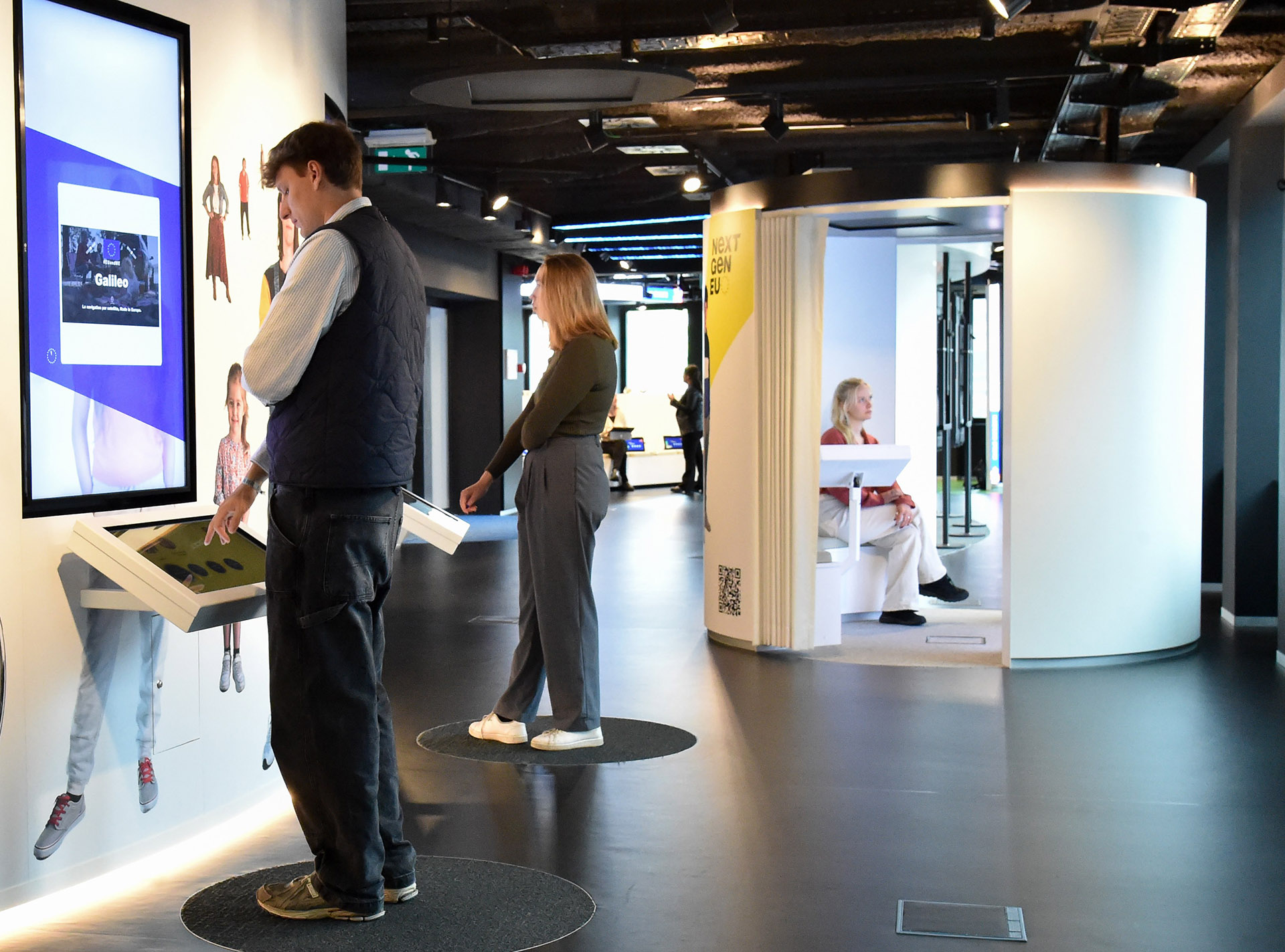
Een ideaal bezoek als u houdt van plekken die aan het denken zetten zonder ooit te vervelen, interactieve parcoursen en culturele ervaringen die zowel het geheugen als de emoties aanspreken, te ontdekken tijdens een verblijf in Brussel, solo, met z’n tweeën of met een nieuwsgierig gezin.
Huis van de Europese Geschiedenis, een levendige reis naar het hart van ons gedeeld geheugen
Op een steenworp van de Europese instellingen, in het hart van de Europese wijk van Brussel, verrast het Huis van de Europese Geschiedenis al bij de eerste aanblik. Gevestigd in een prachtig art-decogebouw, oorspronkelijk een kliniek uit de jaren 1930, biedt dit museum een originele en diep menselijke benadering van de geschiedenis van het continent. Ver weg van clichés blijkt het bezoek levendig, toegankelijk en vaak verrassend.
Europa anders vertellen
Hier wordt de geschiedenis van Europa niet vanuit één enkel perspectief verteld, maar verkend via zes grote invalshoeken die de permanente tentoonstelling structureren. Van Europa vormgeven tot Het Europa van vandaag, via Europa in puin of Een verdeeld continent heropbouwen, nodigt het parcours u uit om de grote breuklijnen, hoop en spanningen te begrijpen die het continent hebben gevormd.
Het museum beperkt zich niet tot een institutionele of politieke lezing. Het verweeft collectieve en individuele perspectieven met culturele, sociale en ideologische dimensies, en toont zo een rijke, genuanceerde en sterk belichaamde geschiedenis.
Een immersieve en toegankelijke scenografie
De kracht van het Huis van de Europese Geschiedenis ligt in zijn moderne en interactieve scenografie. Tablets, objecten om te manipuleren, reconstructies, getuigenissen alles is erop gericht om soms complexe inhoud helder en begrijpelijk te maken. U beweegt zich nieuwsgierig van de ene ruimte naar de andere, gedragen door een opstelling die de aandacht prikkelt en tot reflectie aanzet.
Bezoekers spreken vaak over de verrassing die deze aanpak oproept: men verwacht iets ernstigs, misschien zelfs strengs, en ontdekt een vlot en dynamisch museum waar men leert zonder ooit af te haken.
Een duik in herinneringen en emoties
Gaandeweg wordt de Europese geschiedenis ook een persoonlijk geheugen. Alledaagse voorwerpen, oude advertenties, een kleine auto uit het Oosten, meubels uit de jaren 1970 Fragmenten die een glimlach oproepen, herinneringen wakker maken en een directe band creëren tussen verleden en heden.
De grote gebeurtenissen van het continent — van de Napoleontische oorlogen tot de wereldoorlogen, van het IJzeren Gordijn tot de consumptiemaatschappij, van het feminisme tot de oorlog in Joegoslavië — worden met nuance behandeld, zonder overmatige vereenvoudiging maar steeds met aandacht voor nabijheid tot de bezoeker.
Een levendig museum, verankerd in Brussel
In 2017 geopend onderscheidt het Huis van de Europese Geschiedenis zich door zijn ambitie en de middelen die daarvoor zijn ingezet. De collecties, afkomstig uit alle hoeken van Europa, en de kwaliteit van de scenografie maken het mogelijk om urenlang te blijven zonder de tijd te zien verstrijken.
Verankerd in Brussel en tegelijk gericht op de recente geschiedenis van het Europese continent als geheel, slaagt het museum erin verschillende schaalniveaus met elkaar in dialoog te brengen: dat van Europa, dat van de volkeren en dat van de individuen.
Maandag: 13.00 - 18.00 uur • Dinsdag t/m vrijdag: 9.00 - 18.00 uur • Zaterdag en zondag, en elke dag in juli en augustus: 10:00 - 18:00 • Gesloten op 1/05, 1/11, 24/12, 25/12, 31/12 en 1/01.
Prijs
Gratis
Rondleiding
Rondleiding met tablets (beschikbaar in 24 talen)
Duur van het bezoek
1u30 • Rondleiding met tablets (beschikbaar in 24 talen)
Groep
Prijs
Gratis
Rondleiding
Rondleidingen in EN, FR, NL, DE op aanvraag, voor groepen van 10+
OF rondleidingen met tablet (beschikbaar in 24 talen).
Speciale rondleidingen voor schoolgroepen zijn ook mogelijk.
• Vooraf reserveren is verplicht voor groepen van 10 personen en meer.
Rondleidingen voor groepen met een multimediagids moeten ten minste 2 weken van tevoren online worden geboekt.
Rondleidingen met gids moeten ten minste 4 weken van tevoren online worden geboekt.
Andere nuttige informatie
• Speciale rondleidingen voor scholen.
Each tour is facilitated by a member of our museum team, offering their personal interpretation of the theme and a fresh perspective on the collection. Rather than exhaustive lectures, these tours highlight selected objects and aim to spark curiosity, reflection and conversation about European History.
Practical information
- Tours are free and take place from 12:15-13:00 in English. Meet the guide at the Family Kiosk in the Fables Room. No booking required.
- Please be aware that to enter the museum, you must pass through security checks which can take some time – we advise you plan for this in advance.
20 January - Memories of the Shoah
2026 marks 80 years since the closure of the Nuremberg Trials, where Nazi perpetrators were brought to justice. The month of January also offers a time to commemorate the victims of the Holocaust on Remembrance Day. A week prior to the commemoration, the House of European History invites you to take time in the exhibition to remember the victims and hear the individual stories that must never be forgotten.
17 February - Feelings in History
Feelings play a large part in historical narratives: sometimes for contradicting reasons, sometimes driving individuals or entire societies to take action. This February, come and uncover some of the many emotions behind historical events through the vast collection of the House of European History.
17 March - Women in European History
In March we celebrate International Women’s Rights Day, making it the perfect moment to discover some of the extraordinary women represented in the House of European History. Delve into the collection, encounter the objects linked to their lives, and learn more about their impact on Europe’s past.
21 April - Meet Postcolonial? exhibition team 1/2
Our new temporary exhibition “Postcolonial?” has officially opened its doors! Come and meet the team that helped create and shape the exhibition that explores the long-lasting effects that colonisation and its ending have had in Europe over the last 70 years.
19 May - A little more EU in your lunch break
EU don't know EU’re bEUtiful! Discover more about the European Union and the people, programmes and events that connect European countries. “Schuman”, “European Elections” and “Erasmus” this is your chance to learn more about these iconic European stories!
16 June - Love is Love
Love makes the world go round and the House of European History holds many lovely objects and stories. Come and encounter them as you fall in love with history and take a closer look at some stories from the LGBTQIA+ community, their struggle to love who they want, their victories and the waves they made in European history. Love wins!
21 July - No lunchtime tour due to national holiday.
18 August - Europe in motion
Behind every journey lies a story. This month, take a closer look at the movements that transformed Europe: the migrations that reshaped communities, the travels that opened new horizons, and the transport innovations that brought the continent closer together. Let’s uncover the human experiences hidden behind Europe’s roads, routes and roaming.
15 September - Generation to generation
Which generation do you belong to? From Erasmus students setting off on European adventures, to the many age groups who lived, loved, fought and rebuilt this continent, each generation brings its own rhythm to history. Come and uncover how generations shape Europe and how Europe shapes generations.
20 October - A very European playlist
Music in European history carries meaning, memories and moments of gathering. Let’s listen carefully to the sounds and songs throughout the House of European History including ‘’Ode to Joy’’, factory rhythms, Eurodance beats and Eurovision favourites...
17 November - Meet Postcolonial? exhibition team 2/2
“Postcolonial?” is the current temporary exhibition here at the House of European History. It explores the long-lasting effects that colonisation and its ending have had in Europe over the last 70 years. Come and meet the team that shaped this exhibition.
15 December - Preparation for a festive season
Say hello to the festive season! Brush up on stories of European history for the perfect dinner table conversation this holiday period. Looking for inspiration for the perfect gift? Try a trip to the House of European History! Let’s unpack the history of certain objects that were given and maybe even returned.
Get to know the museum’s essentials
Once a month, join our French-language guided tour designed for individual visitors who want an engaging introduction to the permanent exhibition. In 90 minutes, you will discover essential objects and stories while learning new ways to look, reflect and discuss European history. The tour is completely free and open to adults and teenagers aged over 12. It is ideal for curious visitors coming on their own, or with up to four other people.
About the Visites Découvertes
- During this guided visit, a facilitator will introduce you to the museum and a selection of key objects from the exhibition.
- The tour also involves learning methods, such as "Visible Thinking" and "Slow Looking", which encourage sharing observations or moments for dialogue and reflection within the group.
- The tour will help you see details from European history, connect ideas and feel more confident exploring the rest of the exhibition on your own afterwards.
Practical Information
- Language - French
- Duration - from 14:30 to 16:00, each second Sunday of the month
- Meeting point - Fables room, arrive in advance due to mandatory security checks
- Registration - Participation is free, but registration is mandatory. If the tour is not full, additional visitors may join on the day.
17/04/2026 - 14/03/2027:
* monday: from 13:00 to 18:00
* tuesday, wednesday, thursday and friday: from 09:00 to 18:00
* saturday and sunday: from 10:00 to 18:00
The general guided tour offers an overview of the Postcolonial? exhibition for adult visitors, focusing on the historical link between colonialism and racism. Through selected artworks and objects, the tour explores how colonial expansion contributed to the formation of political, economic, and social structures that still organise power, wealth, and inequality today.
17/04/2026 - 14/03/2027:
* monday: from 13:00 to 18:00
* tuesday, wednesday, thursday and friday: from 09:00 to 18:00
* saturday and sunday: from 10:00 to 18:00
This tour focuses on art as a tool for empowerment, self-representation, and anticolonial and decolonial struggle. It proposes an interpretive path that foregrounds how artistic practices can challenge dominant narratives, connect histories, and speak back to structures of oppression.
18/04/2026 - 14/03/2027:
* monday: from 13:00 to 18:00
* tuesday, wednesday, thursday and friday: from 09:00 to 18:00
* saturday and sunday: from 10:00 to 18:00
Starting with the structural foundations of European colonialism, going through how Europeans preserved power as their empires collapsed and in what manner that affected newly independent countries, the exhibition takes us to present times. It invites us to reflect on the ways colonial history still shapes life today.
Following the Second World War, colonial power seemed to crumble. From 1945 to the end of the twentieth century, more than 80 colonies overcame European rule and declared independence. After decades or even centuries of resistance to brutal oppression, their victories appeared to mark a decisive break with the past. But appearances can be deceiving.
How did the colonial matrix of power – the ideas, events, inequalities and injustices born of colonialism – continue to shape the modern world?
Unique artworks, historical objects and personal stories accompany the visitor throughout this much-needed European reckoning with colonialism.
Participants are introduced to two defining visual traditions of the era: Kalighat paintings and colonial-era lithographic prints. While Kalighat artists utilised bold, minimalist styles and satirical themes like the Babu-Bibi series to critique changing societal norms, mass-produced lithographs democratised art, transforming historical figures like Rani Lakshmibai of Jhansi into widely recognised national icons of patriotism and courage.
Through close observation and comparative analysis, attendees will decode how specific visual elements—such as posture, gesture, color, and composition—communicate themes of leadership, authority, and strength. The workshop concludes with creating an own artwork, applying these historical visual languages to a contemporary context. By reinterpreting these traditional styles, participants will reflect on modern challenges requiring collective action, reinforcing the enduring role of art as a dynamic catalyst for social change.
Partition was one of the most significant and traumatic events in the history of South Asia. Taking place at the end of British colonial rule, it divided the subcontinent into the newly independent states of India and Pakistan. It led to the displacement of millions of people, large-scale violence, the loss of homes and livelihoods, and the separation of families and communities.
Through a talk, a film screening and personal testimonies, the programme will examine Partition not merely as a political event that created new national boundaries, but as a deeply human experience whose memories continue to shape the Indian subcontinent. By situating Partition within the transition from British colonial rule to independence, the programme will also explore how colonial and postcolonial border-making reshaped territories, identities and communities.
The programme will consider how memories of Partition have been preserved within families and passed from one generation to another. It will raise questions about remembrance, silence, trauma and the role of museums, literature and art in documenting difficult histories.
Practical information: English, 17:00-20:00
Talk: Remembering Partition - (30 min talk & 15 min Q&A)
This session will feature Dr. Anwesha Roy, whose work has explored the many histories and memories of the Partition of India. The talk will examine he colonial and political circumstances that led to Partition, the drawing of new borders at the end of British rule, and the experiences of ordinary people who were directly affected by it.
The speaker will discuss personal narratives, oral histories, literature, photographs and archival records to show how Partition was experienced differently across regions, communities and generations. Particular attention will be given to the displacement of families, the loss of ancestral homes, the disruption of shared cultural traditions and the challenges of rebuilding life in an unfamiliar place. The talk will be followed by a question-and-answer session with the audience.
Film Screening and Discussion: The Cinematic Memory of Partition - (120 min)
Cinema has played an important role in representing the violence, displacement and emotional trauma caused by the Partition of India. As part of this programme the film Manto (2018), directed by Nandita Das, will be screened. The film presents the life and work of the celebrated Urdu writer Saadat Hasan Manto, whose stories recorded the violence, absurdity and moral collapse that accompanied the Partition. Through Manto’s personal experiences and literary writings, the film brings attention to the suffering of ordinary people caught between newly created borders and competing national identities. It offers a powerful reflection on how the end of colonial rule, and the creation of new nation-states transformed individual lives, senses of belonging and relationships across borders.